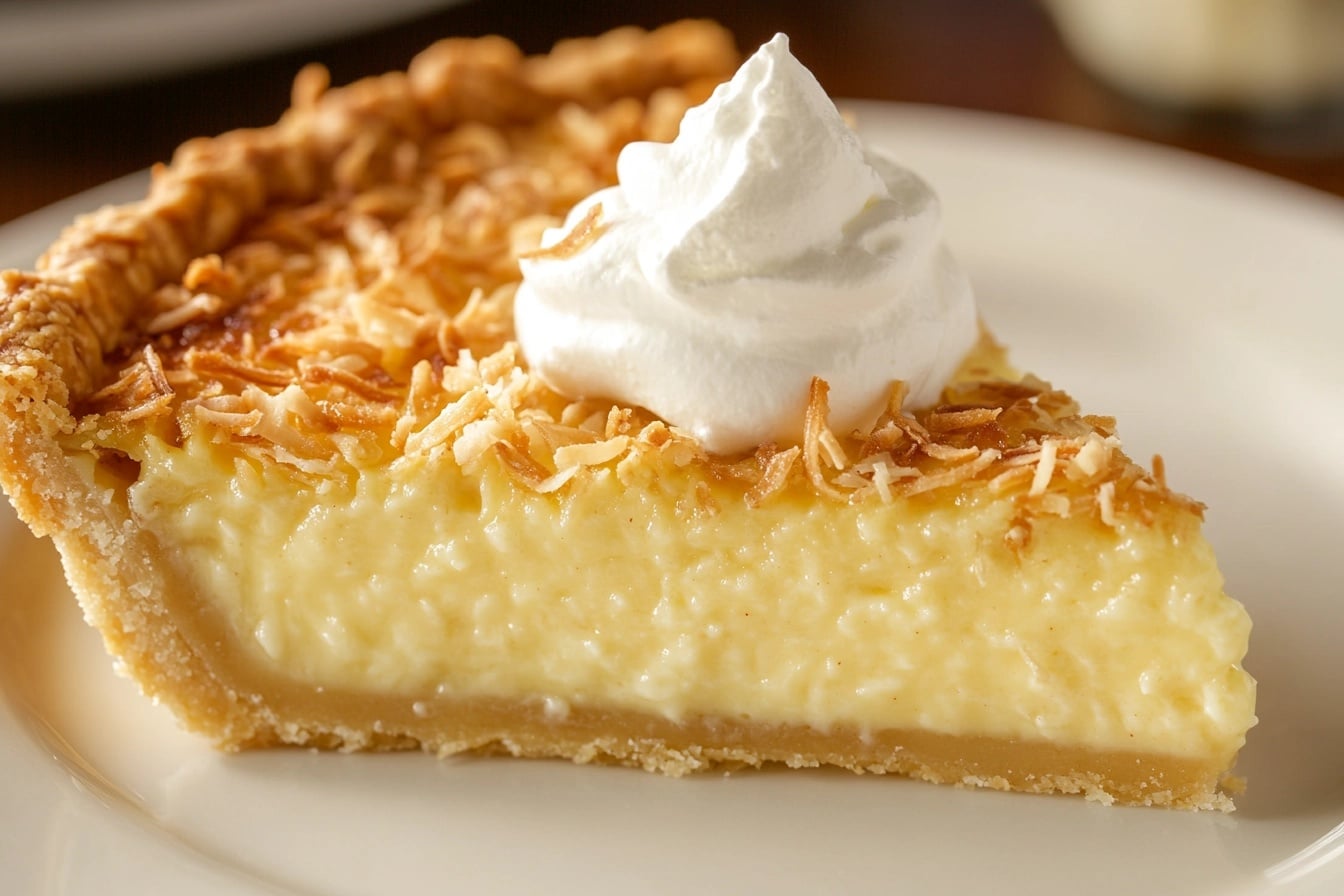
If you’ve ever dreamed of a dessert that tastes like a tropical vacation, look no further than coconut custard pie recipe. This creamy, silky pie is a timeless classic that never fails to impress. Whether you’re serving it at a family gathering, a holiday dinner, or just because you’re craving something sweet, this pie hits the mark every time. Let’s dive into everything you need to know to make this luscious treat!
Table of Contents
What is Coconut Custard Pie?
The History of Coconut Custard Pie Recipe
Coconut custard pie recipe is more than just a dessert—it’s a slice of culinary history. Originating in the kitchens of home bakers in the South, this pie has been a staple at holiday tables for generations. It combines the rich, velvety texture of custard with the tropical flavor of coconut, creating a dessert that feels both indulgent and comforting.
Why Coconut Custard Pie is a Classic Dessert
Why is this pie so beloved? Because it’s simple yet sophisticated. The creamy filling contrasts beautifully with the flaky crust, while the coconut adds a layer of sweetness and texture. It’s the kind of dessert that feels like a hug in every bite.
“Coconut custard pie recipe isn’t just a dessert—it’s a celebration of simple, heartfelt baking.”
Ingredients Needed for Coconut Custard Pie Recipe
Making a coconut custard pie doesn’t require a long list of fancy ingredients. Most of these are pantry staples, with a few special touches to make the flavors shine.

| Ingredient | Quantity |
|---|---|
| Pie crust (homemade or store-bought) | 1 (9-inch) |
| Eggs | 4 large |
| Granulated sugar | ¾ cup |
| Whole milk | 2 cups |
| Heavy cream | ½ cup |
| Vanilla extract | 1 teaspoon |
| Unsweetened shredded coconut | 1 cup |
| Salt | ¼ teaspoon |
Step-by-Step Instructions to Make Coconut Custard Pie Recipe
Preparing the Pie Crust
Let’s start with the base of your pie—the crust. Whether you’re making it from scratch or using a store-bought version, the crust is essential for holding all that creamy goodness.
- Roll Out the Dough: If you’re using homemade dough, roll it out on a lightly floured surface until it fits your 9-inch pie pan. If you’re using a store-bought crust, simply unroll it.
- Fit the Crust: Gently press the crust into the pie pan, ensuring there are no air pockets. Trim any excess dough and crimp the edges for a decorative touch.
- Blind Bake: Preheat your oven to 375°F (190°C). Line the crust with parchment paper, fill it with pie weights or dried beans, and bake for 10-12 minutes. Remove the weights and bake for another 5 minutes until lightly golden.
Pro Tip: Blind baking prevents the crust from becoming soggy when the custard is added.
Mixing the Custard Filling
The custard is the heart of this pie—rich, creamy, and full of flavor.
- Beat the Eggs: In a large mixing bowl, whisk the eggs until smooth and slightly frothy.
- Add the Sugar and Milk: Gradually whisk in the sugar, whole milk, and heavy cream. Continue whisking until the mixture is fully combined.
- Flavor It Up: Stir in the vanilla extract, salt, and shredded coconut. The coconut will float slightly, creating a delightful texture when baked.
Pro Tip: For extra flavor, lightly toast the shredded coconut before adding it to the custard.
Assembling and Baking the Pie
Now comes the fun part—putting it all together!
- Pour the Custard: Carefully pour the custard mixture into the pre-baked pie crust. Use a spoon to spread the coconut evenly.
- Bake: Lower the oven temperature to 350°F (175°C). Place the pie in the oven and bake for 40-50 minutes, or until the custard is set but slightly jiggly in the center.
- Cool and Chill: Let the pie cool at room temperature for about an hour, then transfer it to the refrigerator to chill for at least 2 hours.
Pro Tip: For a flawless finish, tent the pie with foil during the last 15 minutes of baking to prevent over-browning.
Cooling and Serving Tips
Cooling is crucial for achieving the perfect texture. Once chilled, the pie is ready to slice and serve. Pair it with a dollop of whipped cream or a sprinkle of cinnamon for an extra touch of elegance.
“A well-chilled pie is like a perfectly tuned instrument—smooth, balanced, and ready to impress.”
Nutrition Facts
Here’s the approximate nutritional breakdown for one slice (based on 8 servings):
| Nutrient | Amount per Serving |
|---|---|
| Calories | 320 |
| Total Fat | 16g |
| Saturated Fat | 10g |
| Carbohydrates | 38g |
| Sugar | 25g |
| Protein | 6g |
| Fiber | 2g |
Note: Nutritional values may vary depending on the specific ingredients used.
Common Problems and Solutions
How to Prevent a Soggy Crust
A soggy crust is every baker’s nightmare. To avoid it:
- Always blind bake the crust before adding the custard.
- Use a well-chilled crust to create a barrier against moisture.
- Avoid overfilling the crust with custard.
Fixing a Runny Custard Filling
Runny custard can be a result of underbaking or an improper egg-to-liquid ratio. If the pie isn’t set after baking, return it to the oven for 5-10 more minutes, checking frequently.
Preventing Cracks on the Pie’s Surface
Cracks usually happen when the custard is overbaked or cooled too quickly. Bake just until the center is slightly jiggly, and cool the pie gradually at room temperature before refrigerating.
Variations of Coconut Custard Pie Recipe
Sometimes it’s fun to put a creative spin on a classic recipe. Here are a few variations that will take your coconut custard pie to the next level.
Coconut Cream Pie vs. Coconut Custard Pie
You might wonder, what’s the difference? While both are coconut-based pies, a coconut cream pie is made with a chilled, pudding-like filling topped with whipped cream, while a coconut custard pie is baked, giving it a firmer, more structured texture. If you’re a fan of both, why not try each and decide your favorite?
Gluten-Free and Dairy-Free Versions
- Gluten-Free: Replace the regular pie crust with a gluten-free version made from almond flour or a store-bought gluten-free crust.
- Dairy-Free: Use coconut milk or almond milk instead of whole milk and heavy cream. This substitution enhances the coconut flavor while keeping it dairy-free.
Pro Tip: For a fully vegan option, use an egg substitute like silken tofu or a flaxseed mixture.
Best Tips for Perfect Coconut Custard Pie Recipe
Choosing the Right Coconut
Not all coconut is created equal! Unsweetened shredded coconut works best for this recipe because it adds texture without making the pie overly sweet. If you only have sweetened coconut, reduce the sugar in the custard slightly to balance the flavors.
Enhancing Flavor with Toasted Coconut
Toasting coconut brings out its natural nuttiness and adds a beautiful golden color. Simply spread shredded coconut on a baking sheet and toast it in the oven at 325°F (165°C) for 5-7 minutes, stirring occasionally.
Serving Suggestions for Coconut Custard Pie Recipe

Pairing Ideas for a Complete Dessert Spread
Coconut custard pie shines on its own, but pairing it with complementary flavors can create an unforgettable dessert experience:
- Tropical Vibes: Serve with a side of fresh pineapple slices or mango sorbet for a refreshing contrast.
- Warm Beverages: Pair with a steaming cup of coffee or chai tea to balance the sweetness.
- Light Dessert Table: Include this pie alongside lighter options like fruit salad or mini tarts for a variety of textures.
Pro Tip: Enhance the tropical flavors of your Coconut Custard Pie by serving it alongside this creamy banana split cake recipe for a delightful dessert pairing. If you’re a fan of baked treats, consider trying the rich mounds cake recipe for another indulgent option!
Best Garnishes for Presentation
A little garnish goes a long way in elevating the presentation:
- Whipped Cream: Add swirls of whipped cream around the edges.
- Toasted Coconut: Sprinkle toasted coconut on top for added crunch and visual appeal.
- Fresh Mint Leaves: Place a few mint leaves in the center for a pop of color.
Storage and Reheating Tips
Proper Refrigeration for Leftovers
If you’re lucky enough to have leftovers, here’s how to store them:
- Cool Completely: Let the pie cool completely before storing to avoid condensation.
- Refrigerate: Cover the pie tightly with plastic wrap or place it in an airtight container. It will stay fresh in the fridge for up to 4 days.
Reheating Without Compromising the Texture
Reheating a custard pie can be tricky, but it’s doable:
- In the Oven: Warm individual slices in a 300°F (150°C) oven for 10 minutes. This keeps the crust crisp and the custard creamy.
- Avoid the Microwave: Microwaving can make the custard rubbery, so it’s best to stick with the oven method.
Pro Tip: You can freeze the pie for up to 2 months. Thaw it in the fridge overnight before serving.
Frequently Asked Questions about Coconut Custard Pie Recipe
Can I Use Sweetened Coconut Instead of Unsweetened?
Yes, but adjust the sugar in the recipe to prevent the pie from becoming overly sweet. Sweetened coconut will also give the pie a slightly softer texture.
How Long Does Coconut Custard Pie Last?
When stored in the refrigerator, the pie stays fresh for up to 4 days. If you want to enjoy it later, freezing is a great option.
Can I Freeze Coconut Custard Pie?
Absolutely! Wrap the pie tightly in plastic wrap and foil before freezing. To serve, thaw it in the refrigerator overnight and enjoy within two months for the best taste.
Why Is My Custard Too Firm?
If your custard is overly firm, it may have been baked too long. Remove the pie from the oven when the center still has a slight jiggle, as it will continue to set while cooling.
How Can I Add Extra Flavor?
For an added flavor boost, try mixing in a splash of coconut extract or a pinch of nutmeg. You can also experiment with a caramel drizzle or chocolate shavings on top.
Conclusion: Why You’ll Love This Coconut Custard Pie Recipe
Coconut custard pie is the ultimate dessert—simple to make, elegant to serve, and absolutely delicious. With its creamy filling, flaky crust, and the tropical touch of coconut, it’s sure to impress at any occasion. Plus, the recipe is flexible, allowing you to customize it to your liking with variations and toppings.
With this detailed guide, you’re now ready to bake the perfect coconut custard pie. Happy baking, and enjoy every creamy bite!